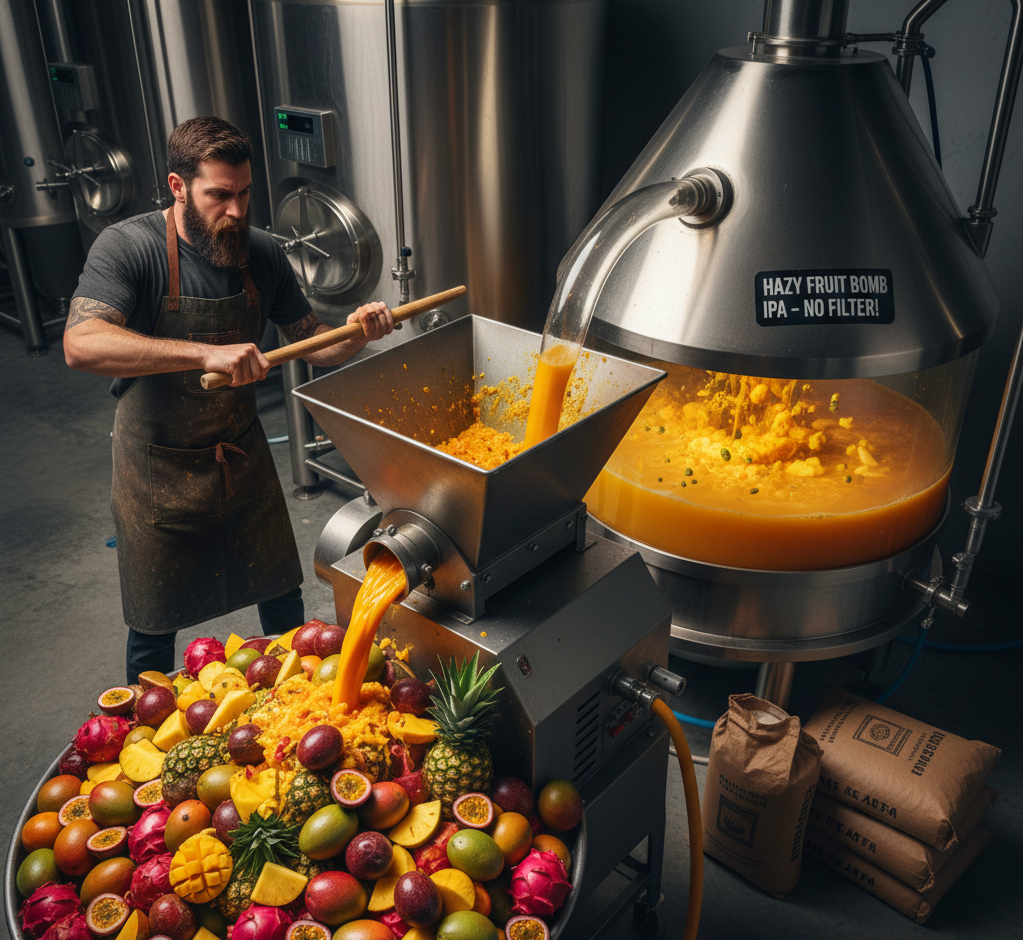
Hazy IPA Myths
In the spirit of our crusade for clarity, let’s dismantle the “juicy” propaganda that keeps the unenlightened reaching for the sludge. Here are the five biggest myths holding the industry back:
Myth 1: Haze Equals Flavor. There is a common misconception that opacity is a byproduct of flavor intensity. In reality, the suspended solids that create haze (yeast, proteins, and polyphenols) are often flavor-neutral or, worse, contribute a chalky, astringent mouthfeel. You can have a massive “tropical” profile in a crystal-clear beer without the liquid sandpaper texture.
Myth 2: It’s “Natural” and “Unprocessed.” Marketing often frames haze as a sign of a “raw” or “honest” product. However, stable haze often requires more manipulation, not less. Brewers frequently add specific high-protein grains (like oats or flaked wheat) or use certain yeast strains specifically because they refuse to settle, essentially “forcing” an unfinished look.
Myth 3: All Hazy IPAs are “Juicy.” The term “Juice Bomb” has become a shield for poor fermentation. Because the beer is served while still full of active yeast and hop particulate, many Hazy IPAs suffer from “hop burn”— a harsh, vegetal throat-scratch that is the exact opposite of the smooth, refreshing experience consumers are promised.
Myth 4: Haze Stays Fresh Longer. Actually, the opposite is true. Because Hazy IPAs contain so much suspended organic matter, they are chemically unstable. They are prone to rapid oxidation, often turning a disgusting shade of “gray-mahogany” and tasting like wet cardboard within weeks of canning. A bright, filtered IPA is a much more durable vessel for hop aromatics.
Myth 5: Filtering “Strips Away” the Character. Lazy brewers claim that filtration removes the soul of the hops. Professional brewing science tells a different story: proper fining and filtration remove the heavy, bitter solids that mask the delicate volatile oils. Filtering doesn’t strip flavor; it unveils it.
About
Hazy Beer Education
Nate Hates Hazy Beers explains why hazy IPA attitudes and production quirks matter, offering clear, evidence-based explanations for curious drinkers and brewers.

 Nate Hates Hazy Beer